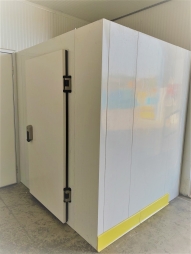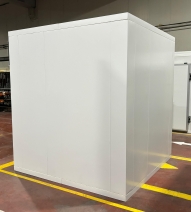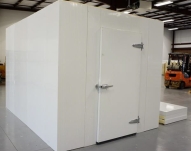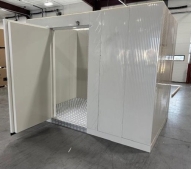





Narrow Panel Choices That Finish Right
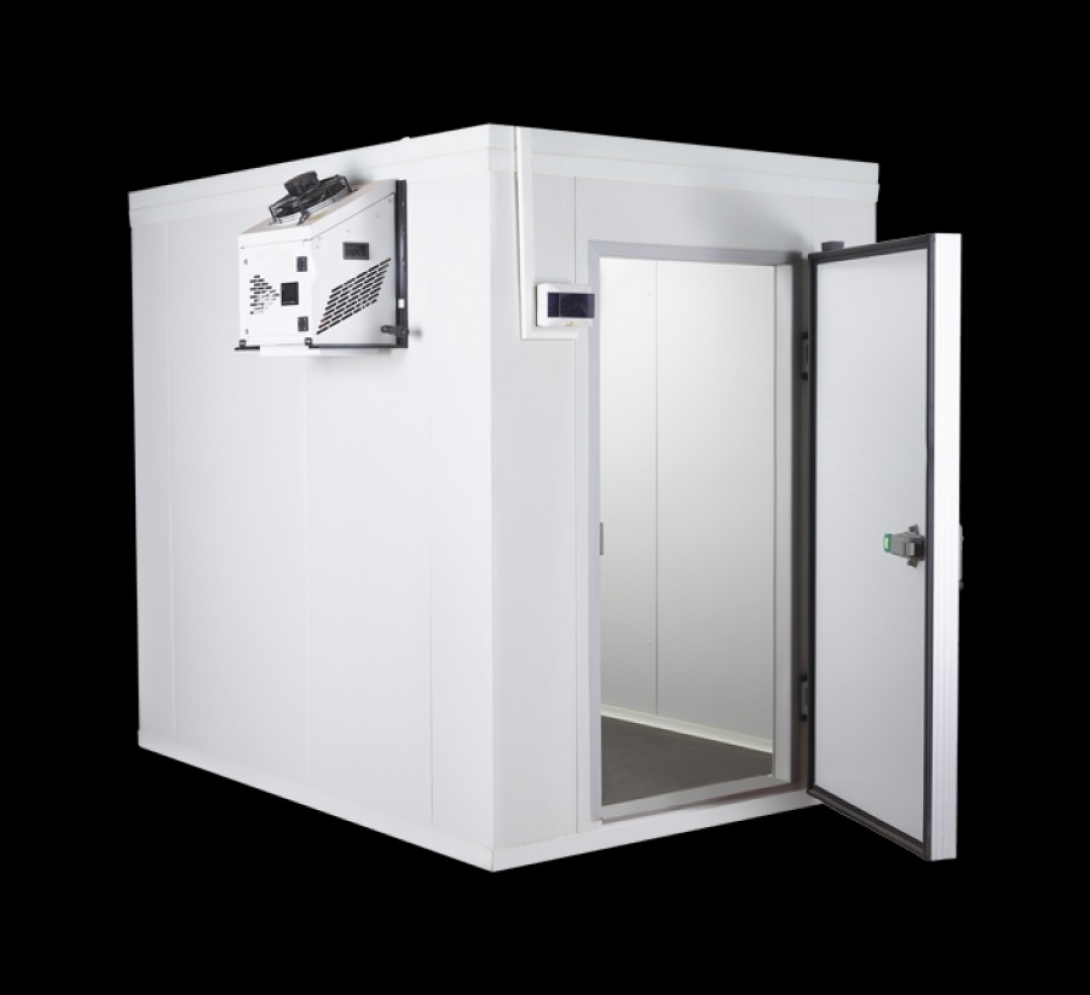
Narrow Panel Choices That Finish Right | Better Cold Room Fit
Choose narrow panel options that finish cold rooms cleanly, reduce field correction, protect layout efficiency, and deliver a more durable final result.
Narrow Panel Choices That Finish Right
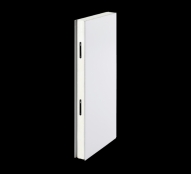
The right narrow panel choice helps a cold room finish cleanly without awkward cuts, uneven closure lines, or layout compromises that show up later in daily use. In most projects, the issue is not whether a narrow panel can fill the remaining span. It is whether the chosen panel width and placement actually support workflow, hygiene, durability, and a finish that looks planned from the start.
That matters because the final panel decision often sits in the most sensitive part of the room. It may land beside a door frame, at an end wall, in a tight traffic path, or in a visible back-of-house area. When the narrow panel choice is right, the room closes with control. When it is wrong, the room may still function, but it rarely feels fully resolved.
Why the Last Panel Decision Matters More Than It Looks
Most cold room layouts proceed smoothly until the final opening requires a decision. The remaining width is too small for a standard panel, yet it remains too significant to ignore. At this point, teams must decide whether to complete the installation with a narrow panel of the appropriate size or to make on-site adjustments to make the wall functional.
This is where many rooms lose their finish quality.
The final panel is typically located where dimensional accuracy is most critical. This can affect the alignment of the door frame, the closure of the corner, the ease of cleaning the wall, or how much usable room width remains for personnel, vehicles, or shelves. In cold rooms, freezer rooms, and refrigerated preparation areas, this closure section is not an insignificant leftover. It is part of the room’s daily performance.
For facility managers and operators, the concern is not just appearance. An incorrect closure selection can lead to friction that persists for years.
The Problem with Narrow Panels Selected Solely by Measurement
A narrow panel should not be selected simply because it fits the remaining gap. It should be selected because it suits the conditions surrounding that gap.
This distinction is important. The closure gap next to a door has different requirements than one on a quiet end wall. A narrow panel next to a traffic corridor is subjected to different pressures than one in a storage area with minimal contact. A panel used in a hygiene-sensitive food area may require a cleaner closure logic than one used in a less exposed service area.
When narrow panels are selected based solely on their dimensions, the room may technically close, but the result often feels incomplete. The panel may appear visually misplaced. Cleaning the closure area may become difficult. The layout may lose slightly more usable space than expected. Even if the numbers add up, the wall’s final rhythm may appear irregular.
The real issue is this: a narrow panel is not just a filler piece. It is a final finishing decision.
What Goes Wrong When the Narrow Panel Choice Is Incorrect
An incorrect choice of narrow panel usually doesn’t lead to an immediate failure. It creates a room that feels slightly off, a sensation that becomes apparent over time.
The cladding near the closure point may look as if it were improvised. The final wall section may be more vulnerable to contact from vehicles, shelves, or personnel movement. The room may lose its intended width if the panels are used in the wrong place. Cleaning crews may have to deal with a narrower passageway or an odd-looking finish line. In visible back areas, the result can quietly undermine the standard the facility is trying to maintain.
There is also a risk of replacement. When an incorrect panel selection leads to increased wear at the end of the line, that section often becomes the first part to catch the maintenance team’s attention. What seems like a simple installation decision turns into a long-term ownership issue.
Even if a panel is technically correct, it may still be the wrong choice for the room.
Comparing Narrow Panel Options Based on Application
The best way to choose a narrow panel is to consider where the panel ends and what that section of the room is used for.
| Narrow Panel Choice | Best Use Case | Main Advantage | Main Watchout |
|---|---|---|---|
| End-wall narrow panel | Final closing span away from heavy traffic | Clean dimensional finish with minimal disruption | Still needs alignment with corners and trim |
| Door-adjacent narrow panel | Closure near a door frame or opening | Protects opening geometry and visual balance | Poor placement can make the opening feel compressed |
| Traffic-side narrow panel | Narrow run near carts, racks, or staff movement | Preserves usable clearance where it matters most | Needs stronger consideration of impact exposure |
| Hygiene-focused narrow panel | Food prep, washdown, or inspection-sensitive zones | Supports cleaner closure and easier wipe-down | Weak finish detailing can undo the benefit |
In most professional cold room environments, the right choice of a narrow panel depends less on the remaining width itself and more on how that final section affects usage, cleaning, and the quality of the finish.
Choosing for Workflow, Not Just Closure
The most common oversight regarding narrow panels is prioritizing the room’s dimensional solution over its operational logic.
A narrow panel placed too close to the wrong side of the room can steal space from the actual path people use. A narrow closure next to a row of shelves can make stocking feel more cramped than expected. A poor choice near a doorway can crowd decorations, disrupt visual symmetry, or make the opening feel unintentional. In cold storage facilities, layout efficiency often hinges on very small margins. Therefore, narrow panel placement is part of workflow planning.
This is particularly true in facilities where wheeled carts, pallet jacks, or personnel repeatedly pass through the same aisle. Losing width in the wrong area is generally worse than losing a little width in a quiet zone. The right choice of narrow panels protects the area of the room under the most pressure.
Selection for Hygiene and Cleanability
In many refrigerated environments, the quality of the cladding cannot be separated from hygiene.
A narrow panel that cleanly encloses the wall can support easier cleaning routines, fewer awkward transitions, and a more controlled surface at the end of a run. However, this is only achieved if the panel selection aligns with the area’s hygiene requirements. A tight seal in a food processing area must be handled differently than one in a low-traffic service environment.
Buyers sometimes underestimate the impact of the final panel at this point. If the wall closes unevenly, cleaning becomes more labor-intensive. If cleaning becomes more labor-intensive, the area begins to require more manpower and attention than necessary. Over time, this situation affects both operational confidence and the perceived quality of the room.
A better choice of narrow panel typically yields better cleaning results, even if the dimensional difference on paper seems small.
A Better Solution for Achieving the Right Finish
The correct approach is to select narrow panels not just based on the area they cover, but on the final finish conditions they address.
This means asking a few practical questions early on. Does the panel end next to a door? Does the area see heavy traffic? Is the room compact, where usable width is as important as the space itself? Will the closure section be visible every day? Will cleaning routines put pressure on this transition? These questions help determine the right narrow panel selection—beyond just width.
The right narrow panel selection helps protect the following:
- Available room clearance.
- Door and corner alignment.
- Clean wall closure.
- Better wiping access.
- Less on-site adjustments.
- A more precise finish.
In projects where the Freezewize Cooling System is planned according to actual site conditions, narrow panels are selected based on how the room is enclosed and how it will function after installation. This is the difference between using a narrow panel as a patch and using it as part of a better enclosure strategy.
Quick Decision Guide
Select your narrow panel not just based on the gap it fills, but on the conditions it will cover.
A narrow panel is generally the right choice in the following situations:
- If the final opening is too small for a standard panel to be installed properly.
- If the sealing area is located near a door frame or opening detail.
- The room is compact and every centimeter of working width matters.
- The end wall section is exposed to regular traffic or equipment movement.
- Hygiene and cleanability are important in the closure area.
- The project requires a cleaner final appearance with fewer on-site adjustments.
When the closure is quiet and low-risk, choose the simplest end-wall narrow panel solution. When the closure affects traffic, openings, visibility, or hygiene, select a more carefully positioned narrow panel.
Related Solutions
Narrow panel options typically yield the best results when coordinated with nearby enclosure elements rather than selected in isolation.
Related solutions may include:
- Cold room doors and frame alignment details.
- Corner panels and closure trim coordination.
- Floor and threshold transitions in narrow installations.
- Protective hardware for wall sections exposed to impact.
- Seal and gasket details for a cleaner final finish.
- Cold room and freezer room layouts designed according to actual traffic flow.
These environmental components often determine whether the final panel is truly properly installed or merely appears to fit.
FAQ
How do I choose the right narrow panel for a cold room?
Start by considering the conditions, not just the remaining width. Evaluate traffic flow, proximity to the door, hygiene requirements, visibility, and how much usable space the room can afford to lose.
If the width is the same, are all narrow panels essentially the same?
No. A narrow panel that works well on a quiet end wall might be the wrong choice next to a door, in a high-traffic area, or in a hygiene-sensitive zone.
Should narrow panels be placed next to doors?
They can be installed, provided the installation maintains proper alignment and sealing quality. Narrow panels adjacent to doors require more careful planning than isolated end-wall closures.
Do narrow panels affect long-term maintenance?
Yes. An incorrect choice of narrow panel can create sealing points prone to wear, more difficult cleaning routines, and a surface requiring earlier maintenance.
Are panels cut on-site a good alternative to narrow panels?
Only in limited situations where precision is not critical. When the sealing area affects the finish, workflow, or hygiene, a purpose-built narrow panel is generally a better long-term solution.
When should narrow panel selections be finalized?
Before installation begins. The best results are achieved when the panel layout is planned according to the room’s actual operating conditions; adjustments cannot be made at the end of construction.
Conclusion
The cold room’s finish is not correct because the wall reaches the line.
The right narrow panel selection is the option that cleanly encloses the room, preserves the space’s functionality, and maintains an intentional appearance even after daily use begins.
If your layout includes a narrow closure gap, evaluate this choice not merely as a matter of size, but as a performance decision. This is often the difference between a room that merely fits and one that is truly finished correctly.