




Modular Fills for Awkward Dimensions
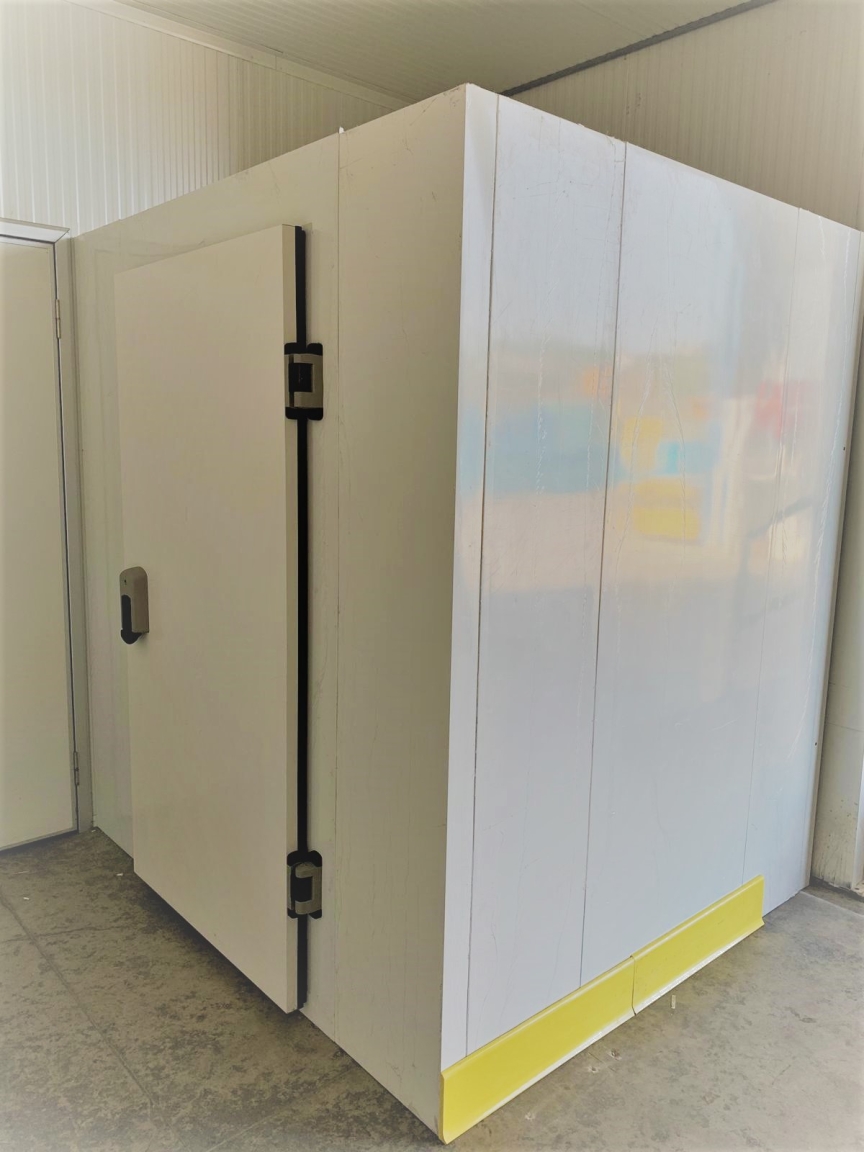
Modular Fills for Awkward Dimensions | Narrow Panels for Better Cold Room Fit
Use modular fills to solve awkward cold room dimensions without rough field fixes, wasted space, or weak closure details that create long-term maintenance friction.
Modular Fills for Awkward Dimensions
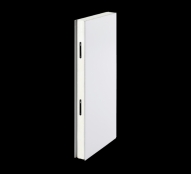
Modular fills are one of the smartest ways to resolve awkward cold room dimensions when a standard panel sequence does not land cleanly. Instead of forcing a wall line to accept the wrong width, narrow panels used as modular fills help preserve alignment, reduce field correction, and create a more controlled finished enclosure.
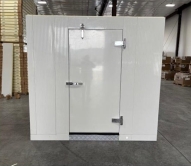
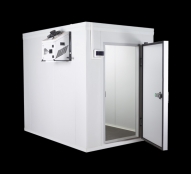
That matters because awkward dimensions rarely stay isolated to the drawing. In cooler rooms, freezer rooms, and refrigerated workspaces, they usually show up beside doors, corners, service areas, or tight circulation paths. A cleaner modular fill strategy helps the room close properly, protect usable space, and avoid the kind of improvised finish that becomes a daily irritation later.
Where Awkward Dimensions Start Creating Real Problems
Inappropriate dimensions usually arise not within ideal layouts, but at the edges of real-world construction projects.
A cold room must be adjacent to an existing wall. A corner line meets a door opening of an odd dimension. A cooler is placed in a back-of-house area with structural constraints, drainage, service runs, or opening requirements that were designed without considering standard panel widths. On paper, these conditions may seem insignificant. However, this is precisely where projects begin to lose control on-site.
This is particularly true in facilities where space constraints are already high. Supermarket backrooms, food preparation areas, warehouse picking zones, and processing support rooms rarely have ample space. When a wall is improperly positioned, the impact can quickly affect workflow. Staff movement is restricted. Vehicle access routes become less natural. Cleaning access becomes difficult. The final section of the partition begins to look like a fix rather than an integral part of the original design.
Therefore, improper dimensions are not merely installation headaches. They are decision points that affect the room’s performance, feel, and aging process.
Why Improvised Gap Filling Often Creates More Friction
When a wall line reaches an awkward remaining dimension, the first instinct is to resolve it on-site. Cutting a panel, shifting a line, squeezing in a closure piece, or accepting a detail that technically finishes the wall.
This approach may complete the job, but it usually results in a weaker room.
The first issue is finish quality. Improvised fill conditions tend to appear where the eye is most drawn: near a corner, near a frame, at the end of a wall line, or along a visible back-to-wall line. The second issue is consistency. When a patch is created reactively rather than planned modularly, joint control, waterproofing, alignment, and cleanability can become less predictable. The third issue is long-term ownership. A patch-repaired solution may still function thermally, but it typically requires more cleaning over time, shows more visible wear, and demands more maintenance.
In cold room construction, filling the gap is not the same as properly resolving the issue.
The Risk of Treating Inappropriate Dimensions as a Minor Detail
Even if a panel layout is mostly correct, inappropriate dimensions can still create a poor ownership experience if handled carelessly.
This is the real risk. The room may cool properly, pass the initial inspection, and appear acceptable from a distance. However, the reality of daily operations tells a different story. Poorly managed panel installation can reduce clearance in areas where pallet jacks or carts are already struggling. It can leave behind a closure detail that is harder to clean in food-sensitive areas. It can create a surface that looks visibly out of place with the rest of the room. It can also signal to the facility team that the enclosure was completed with compromises rather than proper control.
These issues rarely manifest as dramatic failures. They emerge as recurring minor issues.
Over time, these issues translate into costs: more time spent cleaning up mismatched transitions; increased wear in areas where the layout constricts traffic; more repairs at sensitive sealing points; and greater pressure to correct details that should have been designed correctly from the start.
Modular Fillers, On-Site Repairs, and Standard Panel Continuity
When misaligned dimensions arise, the most important comparison is generally not between narrow panels and standard panels. It is a comparison between modular fillers and the logic of temporary fixes.
| Approach | Best Use Case | Main Advantage | Main Drawback |
|---|---|---|---|
| Modular fill with narrow panel | Odd remaining spans, tight closures, visible finish zones | Cleaner fit, repeatable logic, better closure control | Needs early sizing and layout attention |
| Standard panel continuation | Straight, repeatable runs with full-width compatibility | Efficient in regular layouts | Poor suitability when the last span becomes irregular |
| Field fix or cut-down adjustment | Limited one-off correction in low-sensitivity zones | Fast short-term flexibility | More inconsistency, more rework risk, weaker finish quality |
In most commercial cold room applications, modular fillers are the most logical choice when a mismatched dimension affects more than just a simple wall finish. If it impacts hygiene, movement, visibility, sealing quality, or adjacent components, a modular solution typically yields better results.
Why Do Narrow Panels Work So Well as Modular Fillers?
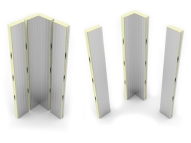
Narrow panels are effective as modular fillers because they preserve the integrity of the wall system.
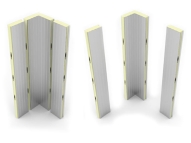
Instead of disrupting the rest of the enclosure to compensate for an odd dimension, they ensure the room is sealed with a defined, purpose-built piece that behaves as an integral part of the panel system. That is the true value. The filler is treated not as an exception, but as a controlled component of the enclosure.
In practice, this supports better alignment at corners, a smoother seal near doors, and a more consistent wall rhythm throughout the room. It also helps preserve usable space in compact refrigerators and freezers—where even a few centimeters of loss could affect shelf placement, staff movement, or cleaning access.
In hygiene-sensitive facilities, modular fillers also support a more controlled final finish. A specially designed narrower panel typically requires less challenging edge finishing than last-minute on-site adjustments. This can improve cleanability and make it easier for the room to maintain a neat appearance under daily use.
Therefore, modular fillers are often a smarter solution for challenging dimensions: they solve the problem without making the room feel compromised.
A Better Solution for Cold Room Layout Control
The better solution is to identify irregular openings early and plan them as modular filler conditions from the start.
This means reviewing not just the problematic measurement, but the entire enclosure. Irregular dimensions must be evaluated in relation to nearby door types, traffic routes, corner conditions, threshold details, service areas, and cleaning routines. A wall ending near a heavily used opening has different requirements than a wall ending at a storage edge with little traffic. Good planning takes this difference into account.
A strong modular infill strategy should help ensure:
- Wall continuity.
- Clean closure in irregular openings.
- Usable space in tight areas.
- Better alignment with doors and corners.
- Easier access for cleaning and wiping.
- Less on-site improvisation during installation.
This is where the Freezewize Cooling System approach comes into play. In real-world projects, narrow panels used as modular infill help resolve odd dimensions without compromising on aesthetics. The goal isn’t just to “fit the room.” The goal is to fit it in a way that feels clean, durable, and well-planned—even after delivery.
Quick Decision Guide
If the remaining wall size is irregular and the final fit affects operation, finish quality, or long-term maintenance, opt for narrow-panel modular fillers.
It is generally a better choice in the following situations:
- When the wall line ends with an odd number of remaining dimensions.
- If the irregular opening is located near a door frame or corner detail.
- If the room is compact and usable space is critical.
- If the area has regular cleaning requirements or food safety expectations.
- If the project team wants to avoid visible on-site adjustments.
- If the enclosure needs to present a deliberate appearance in background operations.
Standard panels remain the right solution for regular and repeatable wall lines. However, when dimensions become unsuitable and sealing is critical, modular fillers typically provide cleaner and more reliable results.
Related Solutions
Modular fillers deliver the best results when coordinated with adjacent cold room elements, rather than being treated as isolated solutions.
Related solutions may include:
- Coordination of cold room doors and frame layouts.
- Corner panels and end-wall sealing details.
- Floor and threshold transitions in tight spaces.
- Protective hardware where vehicles or shelves approach the wall line.
- Seals, trim, and finish details for hygienic sealing.
- Refrigerated and freezer room layouts planned according to actual site dimensions.
These related components typically determine whether an improper dimension will blend into a well-designed room and disappear, or remain visible as a compromise.
FAQ
What is modular filler in a cold room panel layout?
Modular filler is a purpose-built panel section—typically a narrow panel—used to resolve irregular gaps without resorting to rough on-site improvisation.
Are modular fillers better than cutting panels on-site?
In most planned applications, yes. They generally provide better fit, better consistency, and a cleaner long-term result compared to a reactive on-site cutting solution.
Do modular fillers help preserve usable space?
Yes. They can prevent the loss of internal clearance in the layout when fitting a panel width that does not conform to final dimensions.
Are modular fillers only used for small cold rooms?
No. They are useful in any enclosed space where the remaining wall dimensions become irregular, including larger cold storage facilities with tight sealing zones.
Do modular fillers improve hygiene?
They can. A more controlled installation typically supports cleaner detailing and fewer awkward transitions that make regular cleaning difficult.
When should odd dimensions be addressed?
As early as possible. The best results are achieved by planning for irregular openings within the panel layout before installation begins.
Conclusion
Irregular dimensions don’t have to result in awkward rooms.
When an irregular opening threatens alignment, finish, or workflow, a modular fill featuring a narrow panel is often the smartest way to cleanly complete the layout.
A better filling strategy preserves more than just the last few centimeters of the wall. It preserves the space, cleanability, alignment, and long-term confidence in the room. If your project currently has odd-sized dimensions, this is the right stage to resolve them using a modular approach that maintains consistency from start to finish.