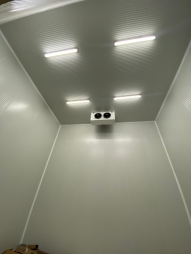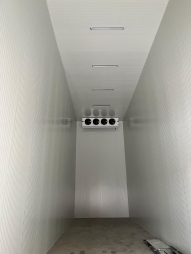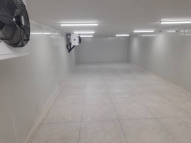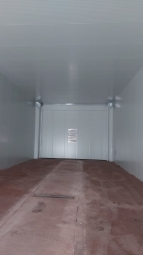





Cold Room Ceilings Without Thermal Drift
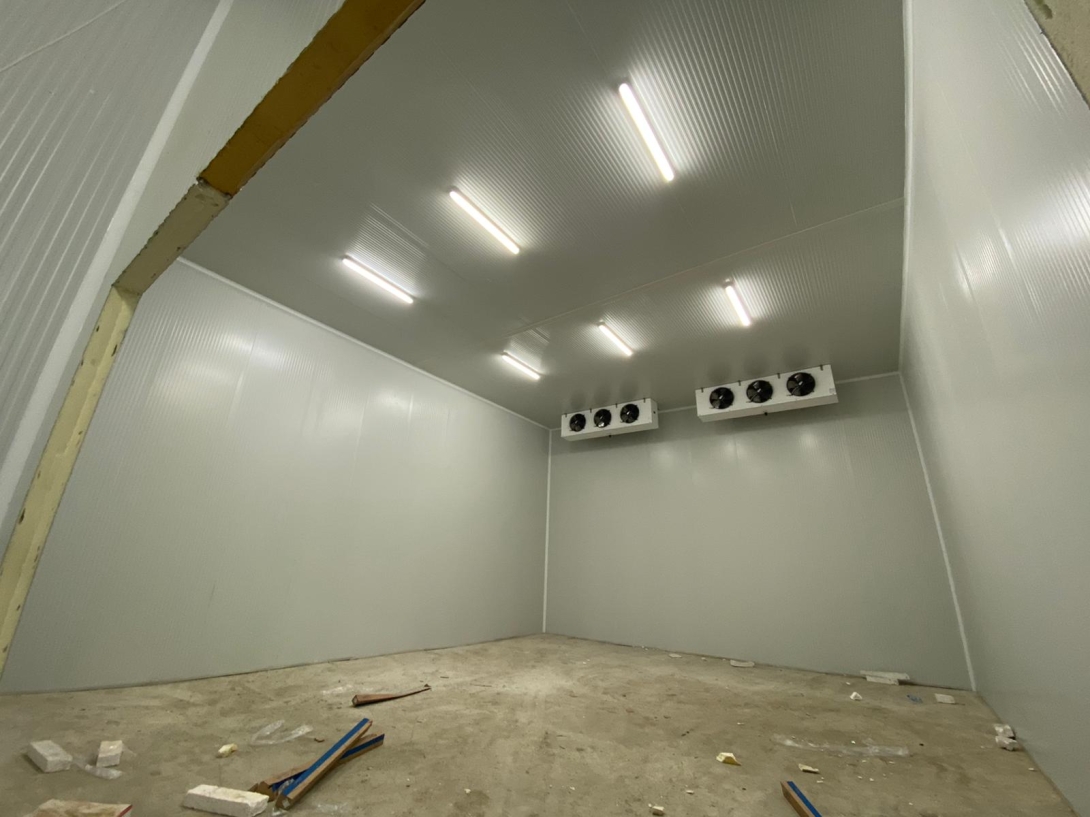
Cold Room Ceiling Panels That Reduce Thermal Drift and Protect Room Stability
Cold room ceiling panels help reduce thermal drift, protect temperature stability, and lower long-term energy and maintenance pressure in refrigerated spaces.
Cold Room Ceilings That Hold Temperature Without Thermal Drift
A cold room ceiling panel helps prevent thermal drift by keeping the upper envelope of the room insulated, sealed, and structurally stable over time. When the ceiling performs properly, the room holds temperature more consistently, the refrigeration load stays more predictable, and the space feels tighter in daily operation.
This matters because thermal drift rarely appears as one dramatic failure. It usually builds slowly through overhead heat gain, weak joints, moisture movement, and ceiling conditions that no longer support stable refrigerated performance. By the time teams notice uneven room behavior, rising energy pressure, or recurring condensation, the ceiling is often part of the reason.
The Problem Often Starts Overhead
Many cooled rooms are evaluated based on doors, wall panel cladding, or condensing units. Although the ceiling is located at one of the most critical points of the room’s envelope, it receives less attention. External heat pressure, air leakage, structural movement, holes, and exposure to moisture can begin to quietly push the room away from stable performance.
In real-world facilities, thermal drift rarely manifests as an obvious mechanical failure. Instead, teams begin to notice smaller signs. The room takes longer to return to normal after periods of heavy traffic. Temperature consistency feels less reliable. Moisture may be visible around upper seams or holes. Certain areas of the room appear to behave differently from others. Energy usage begins to feel higher than it should be.
This creates a frustrating situation for contractors, facility managers, and cold storage operators. The room is still cold, but it no longer feels under control. It becomes difficult to trust the room’s behavior under daily operational pressure, especially when labor, product protection, and compliance expectations are already high.
Why Does Thermal Drift Cause More Than Just an Efficiency Problem?
Thermal drift may seem like a technical issue, but it becomes an operational problem on the ground. A room deviating from consistent thermal performance causes friction across many parts of the operation.
When ceiling conditions allow heat movement or compromise the ceiling’s integrity, the cooling system must work harder to maintain the setpoint. Recovery times may lengthen. Minor temperature imbalances become part of daily operations. Maintenance crews may spend more time checking gaskets, transition points, or surface moisture conditions. Staff may not be able to define the issue in engineering terms, but they sense it from the room’s behavior.
Therefore, a ceiling may be installed, insulated, and technically “complete,” yet it may still be the wrong ceiling for long-term cooling use. If it does not help the room resist thermal drift, it can slowly increase the energy load, maintenance load, and ownership cost without appearing like a major design flaw from day one.
The Risk of Choosing the Wrong Ceiling Approach
A wrong ceiling solution doesn’t have to collapse or visibly fail to be costly. In many projects, it simply allows for enough thermal inconsistency to lead to a long series of minor issues.
These issues typically include:
- Less stable room temperature over time.
- Higher cooling demand and reduced operational efficiency.
- Risk of condensation or freezing around ceiling joints and transition points.
- More frequent maintenance requirements for ceiling details.
- Premature visual aging of the ceiling area.
- Diminished confidence that the room was originally designed correctly.
This is particularly critical in facilities with regular door cycles, pallet movements, cleaning routines, or long operating hours. In such environments, even a moderate thermal deviation can lead to significant performance and cost issues. The room may still function, but it begins to demand more from those responsible for ensuring its reliability.
Basic Ceiling Closures with Ceiling Panels Designed for Thermal Stability
When evaluating a cold room ceiling, the key decision is not whether the ceiling should be installed or not. The key decision is whether the ceiling will actively support thermal stability or merely serve as a basic ceiling barrier.
This distinction is decisive in determining many long-term performance outcomes.
| Decision Factor | Ceiling Panels Built for Thermal Stability | Basic Overhead Closure |
|---|---|---|
| Temperature consistency | Better support for stable room performance | More vulnerable to gradual drift |
| Joint performance | Stronger sealing logic across the ceiling plane | More dependent on field conditions |
| Moisture control | Better suited for condensation-sensitive environments | Higher risk around seams and penetrations |
| Long-term efficiency | Helps reduce avoidable refrigeration load | Can increase energy pressure over time |
| Maintenance outlook | More predictable ownership pattern | More reactive corrections likely |
| Suitability for refrigerated rooms | High | Conditional |
This comparison is important because thermal drift typically stems not from a single obvious flaw, but from accumulated weaknesses. A ceiling designed around room stability helps prevent the onset of this accumulation.
What Actually Helps a Ceiling Resist Thermal Drift
A ceiling does not prevent thermal drift solely through insulation thickness. Stability stems from how the entire ceiling installation functions as part of the room envelope.
This means the ceiling panel system must support tight joints, reliable vapor control, clean integration with wall panels, and careful coordination around lights, suspension points, and service penetrations. It also means structural planning is crucial. If the ceiling is insufficiently supported or poorly detailed, long-term movements can weaken areas that must remain fully rigid.
In practice, cold room ceilings that best resist creep typically possess several key characteristics.
Consistent Insulated Shell Performance
A ceiling should not interrupt the room’s thermal logic; it should continue it. If the upper plane is weak, irregular, or poorly connected, the room becomes more vulnerable to gradual heat gain and inconsistent internal conditions.
Controlled Panel Joints
Joint quality is important because air leakage typically begins not at the center of the panel but at the transition points. Ceiling panels that interlock properly and remain stable over time help reduce pathways that contribute to thermal bridging.
Better Drilling Planning
Lighting, fire system coordination, hangers, and service points can become thermal weak points if not properly planned. A well-designed ceiling accounts for these realities before they turn into problems requiring constant correction.
Moisture and Vapor Control
Thermal deflection is often linked to moisture behavior. A ceiling that manages vapor movement and reduces the risk of condensation does more than just preserve appearance; it also helps maintain the room’s ability to perform consistently.
The Right Solution for Rooms Requiring Constant Temperature
If the room must reliably maintain its temperature during daily use, the ceiling should be treated not as a finishing layer but as a performance component. The correct solution is typically a purpose-built cold room ceiling panel system selected by considering temperature stability, joint integrity, support logic, and long-term cooling suitability.
This requires more than just looking at the presence of panels or their nominal insulation. Buyers should review the room size, ceiling span, target temperature, cleaning frequency, transition points, traffic conditions, and the interaction between the ceiling, wall panels, doors, and equipment. A ceiling that appears acceptable on installation day may still be the wrong choice if it fails to maintain a stable room environment over time.
A more robust ceiling solution typically includes:
- Insulated ceiling panels sized according to actual room conditions.
- Tight connection details that help reduce temperature deviation.
- Reliable support planning for long-term ceiling stability.
- Careful consideration of lighting and service penetrations.
- Performance compatible with wall panels and door systems.
- Surfaces and details that remain manageable under actual facility use.
This is where experienced specification drafting skills come into play. The Freezewize Cooling System treats cold room ceilings as part of the overall thermal envelope and helps projects avoid common mistakes, such as treating ceiling panels as passive enclosures rather than active thermal protection.
Quick Decision Guide
A higher-performance cold room ceiling panel is generally a better choice in the following situations:
- The room must maintain a consistent setpoint with minimal fluctuations.
- Energy performance is a key concern for facility owners.
- Condensation risk must be kept low.
- There are openings, lighting, or suspended elements in the ceiling.
- Long operating hours make thermal inefficiency more costly.
- The facility has low tolerance for recurring ceiling maintenance.
A more basic ceiling approach may be acceptable in light-duty applications where performance expectations are lower. However, in situations where room stability is critical, a ceiling designed to resist thermal drift is generally a safer long-term choice.
If the room requires reliable temperature control, the ceiling should be designed not just to fill the void but to maintain the thermal boundary.
Related Solutions
A ceiling built to reduce thermal drift works best when the associated room components are selected with the same logic. Useful internal integration opportunities may include:
- Cold room wall panels for full coverage continuity.
- Freezer room panel systems for low-temperature environments.
- Insulated cold room doors for better opening control and reduced leakage.
- Cold room sealing and hardware details for the reliability of joints.
- Cold storage design solutions for coordinated performance throughout the entire enclosure.
These related solutions are most effective when specified together rather than being addressed later as isolated performance issues.
FAQ
What is thermal drift in a cold room?
Thermal drift is the gradual loss of a cold room’s ability to maintain a constant internal temperature. It typically manifests as slower recovery over time, inconsistent cooling behavior, increased energy demand, or humidity issues.
Can a cold room ceiling really affect room temperature stability?
Yes. The ceiling is a critical component of the room envelope. If it has poor airtightness, is poorly designed, or has weakened due to holes and movement, it can directly contribute to thermal drift.
What are the early signs of thermal drift related to the ceiling?
Common signs include inconsistent room behavior, longer cooling or recovery times, condensation near upper joints, freezing at weak points, and a general sense that the room is working harder than it should.
Are thicker panels sufficient to stop thermal drift?
They are not sufficient on their own. Thickness helps, but long-term stability also depends on joint quality, vapor control, structural support, and how the ceiling integrates with the rest of the cooled enclosure.
When should buyers prioritize a higher-performance ceiling system?
They should prioritize it when the room has strict temperature requirements, long operating hours, energy sensitivity, exposure to moisture, or low tolerance for ongoing maintenance repairs.
Does a better ceiling reduce long-term ownership costs?
In most cases, yes. A ceiling that limits thermal drift can provide more predictable room performance, reduce preventable cooling loads, and help prevent recurring ceiling maintenance issues.
Conclusion
A cooled room does not remain stable simply because it has a ceiling. The ceiling remains stable because it actively protects the upper edge of the thermal envelope and prevents small weaknesses from turning into long-term deviations.
A cold room that needs to maintain temperature well requires not just a ceiling that covers the top of the room, but a ceiling designed to maintain stability.
If your project depends on tighter temperature control, lower energy consumption, and a more reliable ceiling envelope, it’s worth reviewing ceiling specifications before thermal drift becomes a part of daily operations.