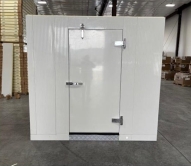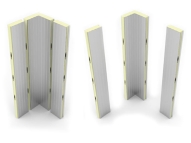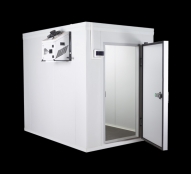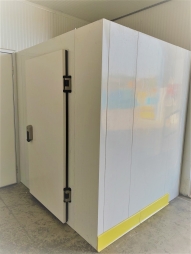





Better Fit at Cold Room Edges
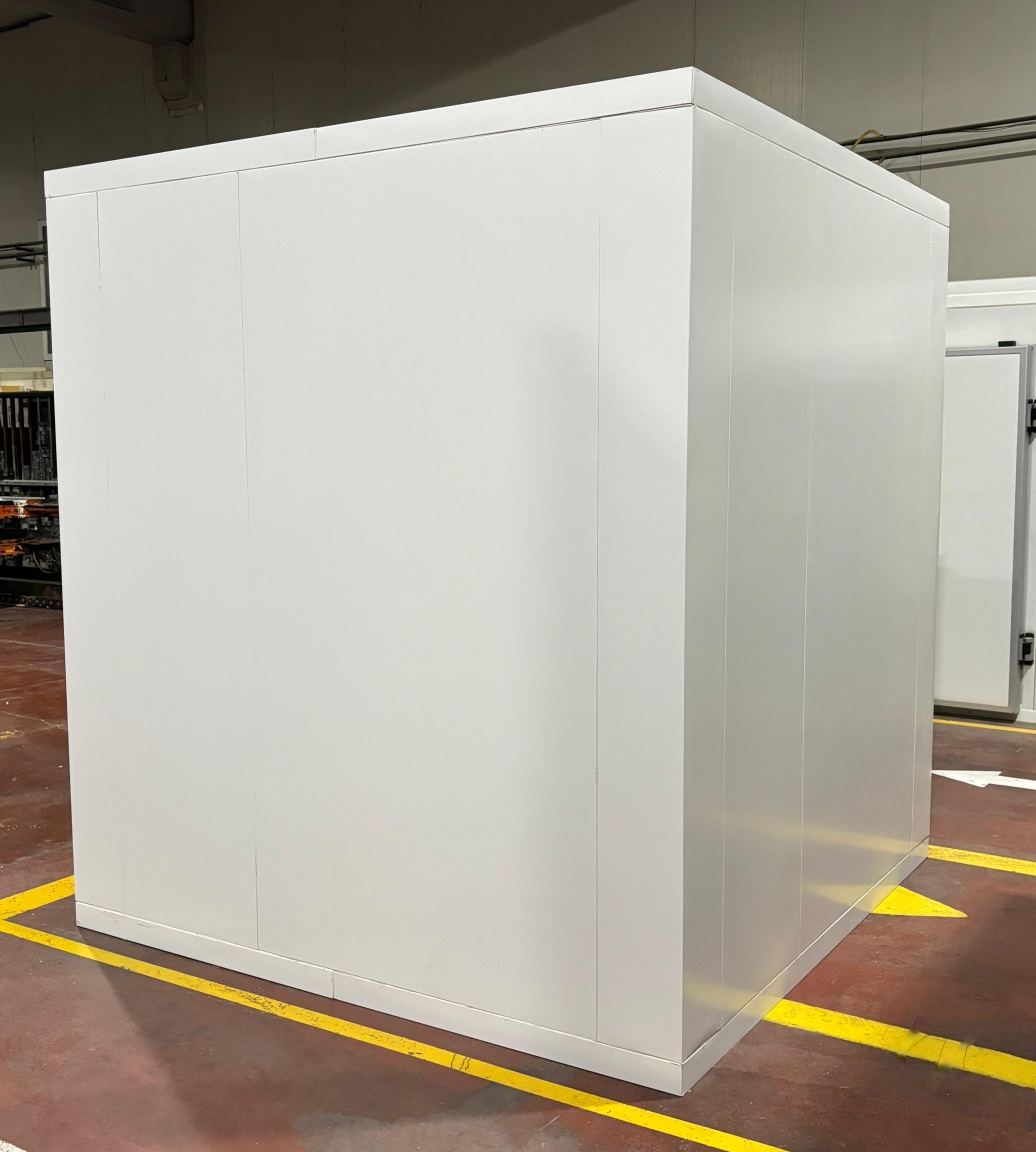
Better Fit at Cold Room Edges | Narrow Panels for Cleaner Layouts
Improve cold room edge fit with narrow panels that reduce awkward closures, protect usable space, and deliver a cleaner, more durable finish.
Better Fit at Cold Room Edges
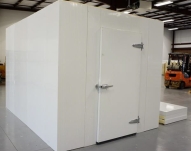
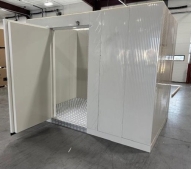
Cold room edges are where layout quality usually gets tested hardest. When a standard panel sequence reaches an end wall, a corner return, or a door-adjacent closing span, a narrow panel often delivers the better fit by resolving the edge cleanly instead of forcing the room into a rough final adjustment.
That matters because cold room edges are not passive details. They sit where people turn carts, where cleaning tools reach, where wall lines meet frames, and where finish quality becomes visible first. A better edge fit improves more than appearance. It supports workflow, hygiene, durability, and a room that feels properly built from the perimeter inward.
Where Edge Problems Start
In most cold room projects, quality loss does not occur in the middle of the wall. Quality loss occurs at the edges.
The problem typically arises where a panel line encounters a fixed obstacle: an existing building wall, a corner, a structural barrier, a door opening, or a narrow circulation path. The room may be close in size, but it may not be close enough for the edge of a standard panel width to finish neatly. At this point, the enclosure must still be closed off, and the decision on how to close it begins to affect the room’s overall feel.
In real facilities, edge conditions are often critical because they are subject to daily wear and tear. Staff pass through the edges. Carts and shelves come close to the edges. Cleaning crews work around the edges. Managers notice them, because the enclosure starts to look either intentional or haphazard here. Even if a cold room is thermally sound, the edges can still feel poorly resolved if they are treated merely as details.
Therefore, edge alignment is not a cosmetic issue. This is where construction precision translates into operational quality.
Why Poor Edge Alignment Leads to Constant Friction
A weak edge detail typically starts as a minor installation compromise and ends as a recurring operational headache.
When an incorrect panel width is forced onto the edge of a cold room, the result usually creates one of several issues. The sealing line may appear uneven. Cleaning the final wall segment may become difficult. The room may lose usable width in an area where movement is already restricted. Edge and seal transitions may feel less controlled. In more open areas, the edge can also become an early wear point because it is where the first contact occurs.
This is particularly true in compact cold rooms, freezer rooms, supermarket backrooms, preparation areas, and processing support zones. These are environments where every centimeter matters and where wall edges are not protected simply because they are technically finished. Poor edge alignment may not prevent the room from functioning, but it generally makes the room less efficient, less cleanable, and less durable than it should be.
This is the true cost of getting the edge wrong. The room still works, but it constantly reminds the user that the final decision was not the right one.
The Risk of Viewing Cold Room Edges as Minor Details
The biggest mistake is assuming that edge issues can always be resolved later on-site.
This assumption creates risk because edge conditions are typically found at the intersection of multiple requirements. A door frame requires proper alignment. A narrow corridor requires a usable opening. A wall end requires a hygienic seal. A visible back area requires a finish that doesn’t look like a patch. When the project reaches that edge without a proper plan, the field team is forced to improvise under pressure.
That is when the room begins to shoulder hidden costs. Labor costs rise because the installer must correct issues the layout plan failed to address. The finish becomes less predictable. Cleaning becomes more difficult. Wear begins sooner when the edge is weak or visually unbalanced. In some cases, the room also loses the interior or exterior opening that operations rely on.
A product may technically fit the edge, but it could still be the wrong choice for the edge. Therefore, edge conditions require as much attention as doors, traffic zones, and main wall lines.
Comparing Edge Fit Options
When the issue is cold room edge fit, the real decision isn’t simply whether to use a narrow panel or not. The real issue is whether the edge will be finished under control or by making compromises.
| Option | Best Use Case | Main Benefit | Main Tradeoff |
|---|---|---|---|
| Narrow panel at edge condition | End walls, corner returns, door-adjacent closures, tight side runs | Cleaner fit, better alignment, more controlled finish | Needs earlier layout planning |
| Standard panel continuation | Open wall runs with forgiving dimensions | Efficient in regular layouts | Often weak at constrained edges |
| Field-cut edge correction | Minor low-risk adjustment in non-sensitive zones | Immediate flexibility on site | Higher labor risk, weaker finish consistency |
| Layout shift to absorb edge mismatch | Projects avoiding narrower widths | Can avoid adding a panel size | Often wastes usable space or disrupts alignment |
In most professional cold room applications, narrow panels are a better option when edge movement affects cladding quality, cleanability, or sealing integrity. These panels help finish the room without shifting all dimensional compromises to the edge.
Where Narrow Panels Most Effectively Improve Cold Room Edges
Narrow panels are particularly effective on edges where the enclosure must do more than just sit in place.
A common example is the wall section next to a door opening. In this location, poorly fitting edges can affect frame balance, the continuity of trim, and how natural the entrance feels during daily use. Another example is the end wall in a compact room where the remaining width competes with shelves, carts, or cleaning access. In these cases, losing even a small amount of usable space at the edge can make the entire room feel narrower.
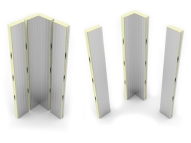
Corner transitions are another key application. If a corner is poorly sealed, the issue becomes visible from multiple angles and often feels harder to clean. Narrow side walls near circulation areas in the back of the kitchen also benefit from narrow panels, as they provide a more practical opening in spaces where staff and wheeled equipment already operate with very little clearance.
This is where narrow panels truly add value. They help the edge behave as an integral part of the room, rather than as an extra strip the installer has to make do with at the end.
A Better Solution for Cleaner Edge Conditions
The best solution is to address edge alignment from the start as an integral part of the room’s performance.
This means evaluating how the edge relates to nearby traffic, frames, corner geometry, cleaning routines, service access, and the facility’s expected visual standards. A cold room edge next to a door should not be planned the same way as a quiet environment edge. A closure in a hygiene-sensitive food area should not be treated the same way as one in a less-frequented service zone. Better alignment comes from matching the panel selection to the edge condition itself.
A strong narrow panel strategy should help ensure:
- Available clearance at narrow wall edges.
- Cleaner sealing at corners and turns.
- Better alignment next to door frames.
- More consistent wipeable surfaces.
- Less on-site adjustments in the perimeter.
- A more meticulous finish.
In projects where the Freezewize Cooling System is planned according to actual edge conditions, narrow panels are the most logical choice where precision is required around the room and where extra friction must not be created later. When used this way, they are not a patch. They are part of achieving an edge-to-edge finish.
Quick Decision Guide
Choose narrow panels when the cold room edge gap affects sealing quality or daily use.
They are generally a wiser choice in the following situations:
- If the wall line ends at a dimension that standard panels cannot properly cover.
- If the edge is adjacent to a door frame or opening.
- If the closure ends at a corner turn or a visible end wall.
- If there is handcart, shelf, or personnel movement in narrow areas of the space.
- If hygiene and easy cleanability are important in edge areas.
- If the project requires a cleaner finish with fewer on-site adjustments.
Standard panels still deliver good results in open and repetitive lines. However, if edge quality will determine the room’s appearance, cleanliness, and functionality, narrow panels generally yield better results.
Related Solutions
Better edge alignment is often not just about panel width. The best results are achieved when related installation details are planned together.
Related solutions may include:
- Cold room doors and frame alignment details.
- Corner panels and closure strips.
- Floor and threshold transitions at wall ends.
- Protective hardware for edges exposed to impact.
- Seals and gaskets for a cleaner perimeter finish.
- Refrigeration and freezer room layouts designed according to actual traffic flow.
These related elements typically determine whether the room’s edges will be cleanly finished or end up as a section everyone will have to work around later.
FAQ
Why is it more difficult to finish cold room edges cleanly?
Because edges often intersect with fixed building structures, door frames, corners, or traffic routes. This makes them more challenging than open wall lines.
Are narrow panels primarily useful at the end of a wall line?
They are particularly useful there, but they are also effective at corner transitions, on narrow side walls, and in edge conditions adjacent to doors where sealing quality is critical.
Can better edge alignment improve hygiene?
Yes. Cleaner edge conditions generally support easier wiping, fewer awkward transitions, and better long-term cleanliness in food and cold storage environments.
Do narrow panels help preserve usable room space?
Yes. In narrow areas, they can prevent the loss of the room’s working width that would occur when trying to fit a standard panel that doesn’t match the final dimensions.
Is a field-cut edge panel acceptable?
It is acceptable in low-sensitivity areas, but it is generally not the best solution when the edge affects the finish, workflow, or hygiene.
When should edge compatibility decisions be made?
As early as possible during the panel layout phase. Edge issues are easier to resolve during the design phase rather than during final installation.
Conclusion
Cold room edges are where layout discipline becomes visible.
If the room’s perimeter requires a cleaner seal, better clearance, and a more durable finish, a narrow panel is usually a wiser choice.
Better edge alignment protects the areas of the room most exposed to daily use. If your project includes narrow end walls, corner transitions, or closures adjacent to doors, now is the time to address them with a panel strategy that provides a clean finish and remains secure over time.