




Cold Storage Tops Built for Stability
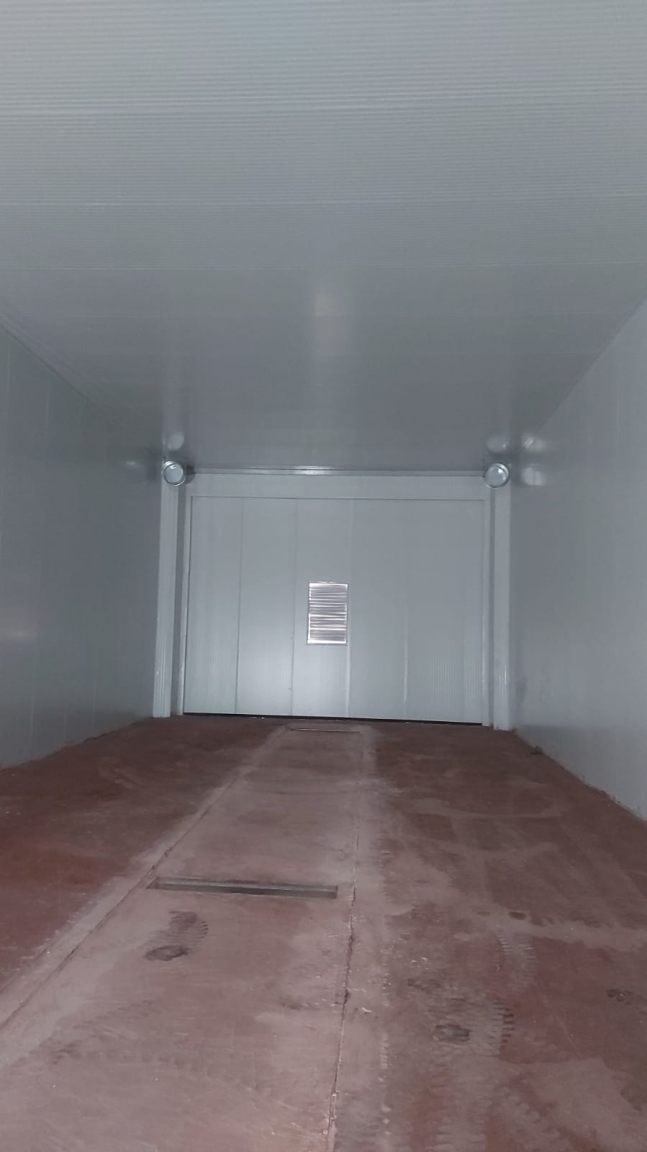
Cold Room Ceiling Panels Built for Stable Cold Storage Performance
Stable cold storage ceilings help rooms stay tighter, cleaner, and more reliable by reducing overhead movement, moisture stress, and long-term maintenance pressure.
Cold Storage Tops Built for Stability
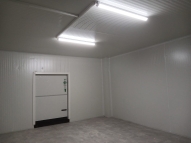
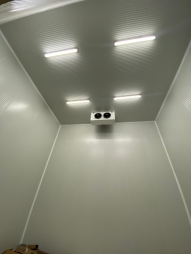
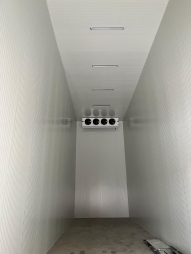
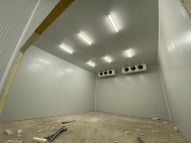
A cold room ceiling panel built for stability helps a refrigerated room stay tighter, more predictable, and easier to manage over time. In cold storage, the overhead section is not just a lid on the room. It is part of the working envelope that supports temperature control, joint integrity, moisture resistance, and long-term structural confidence.
That matters because many cold storage issues do not begin with a visible failure. They begin when the top of the room slowly stops feeling stable. Joints start showing stress, the ceiling feels more vulnerable around penetrations or supports, and the room becomes harder to keep tight, clean, and consistent under daily operating pressure.
The Stability Problem Usually Shows Up Late
Cold storage room ceilings usually look fine when the project is first completed. The panels are in place, the room is sealed, and the cooling system is running. The problem arises when the ceiling installation begins to respond to actual operating conditions rather than the assumptions made on the drawing board.
This is where stability becomes a critical factor. In a room with an inadequately planned ceiling, small signs of stress may begin to appear: joints that no longer look controlled, moisture activity at weak transitions, service issues around ceiling openings, or a ceiling line that requires more attention than it should. None of these issues may seem dramatic on their own, but when they come together, they alter the room’s performance and how it is perceived.
For facility managers, contractors, and cold storage operators, this creates a familiar frustration. The room is technically still functioning, but it no longer feels solid. It feels as though the ceiling was designed merely to enclose the space, not to maintain its standard through years of actual use.
Why Ceiling Stability Is More Important Than Many Buyers Expect
A cold storage ceiling operates under constant stress. Temperature differentials, vapor movement, cleaning routines, suspended fixtures, lighting coordination, and natural expansion and contraction all place a load on the ceiling structure. If the ceiling panel system isn’t designed for stability, these loads begin to accumulate in areas that are difficult and costly to address.
This is particularly important in commercial and industrial applications where the room is expected to operate with minimal downtime every day. Cold storage facilities, food processing areas, supermarket backrooms, distribution coolers, and freezer rooms don’t just need a ceiling that stays in place. They require a ceiling that remains under control.
This distinction is important because instability does not always appear as a structural failure. More often than not, it manifests as a gradually increasing operational burden. Maintaining the room becomes more difficult, it becomes less predictable in moisture-sensitive areas, and the likelihood of requiring corrective work—which should never be necessary in the first place—increases.
The Risk of Choosing a Ceiling That Is Merely Structurally Acceptable
A ceiling may be technically installable, insulateable, and structurally adequate on paper, yet it could still be the wrong choice for long-term cold storage use. This is where many purchasing decisions go wrong.
The wrong ceiling approach can lead to:
- Constant attention required around seams, supports, or holes.
- Greater vulnerability to moisture-related stress.
- Less confidence in long-term room airtightness.
- More difficult coordination during service and maintenance work.
- Earlier visual aging of the ceiling surface.
- Higher likelihood that replacement will be needed sooner than expected.
This is not merely a technical issue. It is a property-related issue. When the ceiling does not feel secure, the entire room feels less reliable. This creates maintenance pressure, erodes confidence in the building’s quality, and leaves operators with the impression that while the room is acceptable at handover, it may not be fully suitable in the long term.
Comparison of Stability-Focused Ceiling Panels vs. Basic Ceiling Finishing
The most important comparison is not between one panel and another on its own. It is between a ceiling system designed for long-term stability and a system designed merely to complete the finish.
| Decision Factor | Stability-Focused Ceiling Panels | Basic Overhead Coverage |
|---|---|---|
| Long-term overhead control | Designed for predictable performance | More likely to depend on minimal compliance |
| Joint confidence | Stronger support for consistent seam behavior | Greater risk of drift at key transitions |
| Moisture resilience | Better suited to cold storage conditions | More vulnerable to overhead stress points |
| Service coordination | Easier to manage over the room life cycle | More likely to create future access friction |
| Visual durability | Holds a more controlled appearance | Can show wear sooner |
| Ownership outcome | More stable and lower-friction | More reactive over time |
This is where the value of better ceiling planning becomes evident. A stability-focused system does more than just improve initial performance. It helps protect the room from the gradual accumulation of minor ceiling weaknesses that can later turn into major maintenance issues.
What Really Makes a Cold Storage Ceiling Stable
Stability isn’t achieved solely through panel thickness. It stems from how the entire ceiling installation is designed, supported, and coordinated with the rest of the room.
A stable cold storage ceiling typically depends on several elements working together.
Better Span and Support Planning
If the support logic is weak, even a good panel can become part of an unstable ceiling situation. Ceiling stability begins with a realistic understanding of room width, suspension method, building interface, and long-term movements.
Stronger Joining Discipline
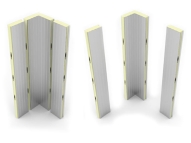
Ceiling joints are often where instability first appears. A robust ceiling panel system must create controlled and reliable connections that resist gradual movement, moisture stress, and visual distortion.
Smarter Drilling Coordination
Lighting, plumbing, sprinkler coordination, hangers, and service points alter the ceiling’s behavior. Stability depends on planning these openings early on, rather than treating them as adjustments to be made on-site later.
Better Moisture Performance
Cold storage ceilings must bear more than just structural loads. They must also resist vapor and condensation pressures that can expose weak details. A stable ceiling reduces the likelihood that moisture will be the first sign of ceiling deterioration.
Stronger Integration with Full Envelope Design
The ceiling cannot be considered separately from the walls, doors, and room fixtures. Stability increases when the upper part of the room is specified not as an isolated surface but as part of a fully insulated system.
The Right Solution for Long-Term Cold Storage Stability
The right solution is typically a cold room ceiling panel system designed with the refrigerated envelope as a true ceiling component. This means selecting the ceiling not based solely on ease of installation or initial cost simplicity, but on long-term stability.
For most cold storage projects, a more robust approach includes:
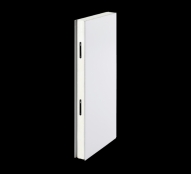
- Insulated ceiling panels suited to actual room requirements.
- Joint details designed to remain under control over time.
- Support and suspension methods appropriate for building conditions.
- Early coordination of lighting, openings, and service access.
- Ceiling performance that is compatible with walls, doors, and sealing details.
- A ceiling finish that maintains a reliable appearance during use.
This is where project experience becomes crucial. The Freezewize Cooling System treats cold room ceiling panels as elements that contribute structurally and thermally to the room’s stability, helping customers avoid common mistakes such as selecting a ceiling that appears complete during installation but leads to ceiling weakness during use.
Quick Decision Guide
A stability-focused ceiling panel approach is generally a better choice in the following situations:
- If the room will operate under continuous or heavy daily use.
- If there are numerous holes or suspended utilities in the ceiling.
- If humidity control and joint performance are critical.
- If the facility has low tolerance for ceiling maintenance.
- If a clean and controlled appearance is required on the back side of the project.
- If the long-term ownership cost is more important than the lowest initial cost.
In lighter-duty areas with fewer holes, lower performance expectations, and limited exposure to humidity or service complexity, a simpler ceiling solution may suffice. However, in serious cold storage environments, ceiling stability must be treated as a fundamental performance requirement.
If the room must remain reliable over time, the ceiling must be constructed not only for sealing but also for stability.
Related Solutions
A stable ceiling delivers optimal performance when surrounding room components are selected with the same logic. Relevant integration opportunities may include:
- Cold room wall panels for full coverage continuity.
- Freezer room panel systems for low-temperature applications.
- Insulated cold room doors for more stable opening control.
- Cold room sealing and hardware details for better transition performance.
- Cold storage design solutions for coordinated room planning.
These related solutions yield better results when planned as a single system rather than addressed as separate issues later.
FAQ
Why is ceiling stability important in a cold storage room?
Because the ceiling affects how well the room maintains temperature consistency, humidity behavior, maintenance access, and structural integrity over time. An unstable ceiling causes friction throughout the room.
Can a cold room ceiling be the wrong choice even if it’s installed correctly?
Yes. A ceiling may meet basic installation requirements but still fall short in terms of long-term stability, especially if joints, supports, and transitions aren’t well-planned.
What are the early signs of an unstable ceiling?
Common signs include visible joint stress, moisture around ceiling transitions, difficult service access, uneven aging in the upper part of the room, and a growing sense that the ceiling requires excessive attention.
Is ceiling stability in refrigerated rooms as important as in freezer rooms?
Yes. Problems may arise more quickly in freezer rooms, but refrigerated rooms also experience issues when ceiling stability is weak, especially in environments with heavy use or high hygiene standards.
What should buyers consider before selecting a cold room ceiling panel?
They should review the clearance requirements, support logic, joint design, transition planning, exposure to moisture, maintenance access, and how the ceiling integrates with the entire room envelope.
Can a better ceiling reduce long-term ownership costs?
In most cases, yes. A more stable ceiling can reduce the need for corrective maintenance, increase confidence in the room, and help prevent premature repairs or replacement of the ceiling.
Conclusion
A cold storage room ceiling must do more than simply cover the room. It must maintain the ceiling line with sufficient stability to support daily performance, long-term durability, and a room standard that remains intact despite use.
A cold room becomes more reliable when the ceiling is constructed to remain stable long after the installation date.
If your project depends on cleaner long-term performance, fewer ceiling repairs, and a stronger refrigerated shell, it would be beneficial to review ceiling specifications early on to ensure stability from top to bottom.