




Overhead Insulation That Holds Its Line
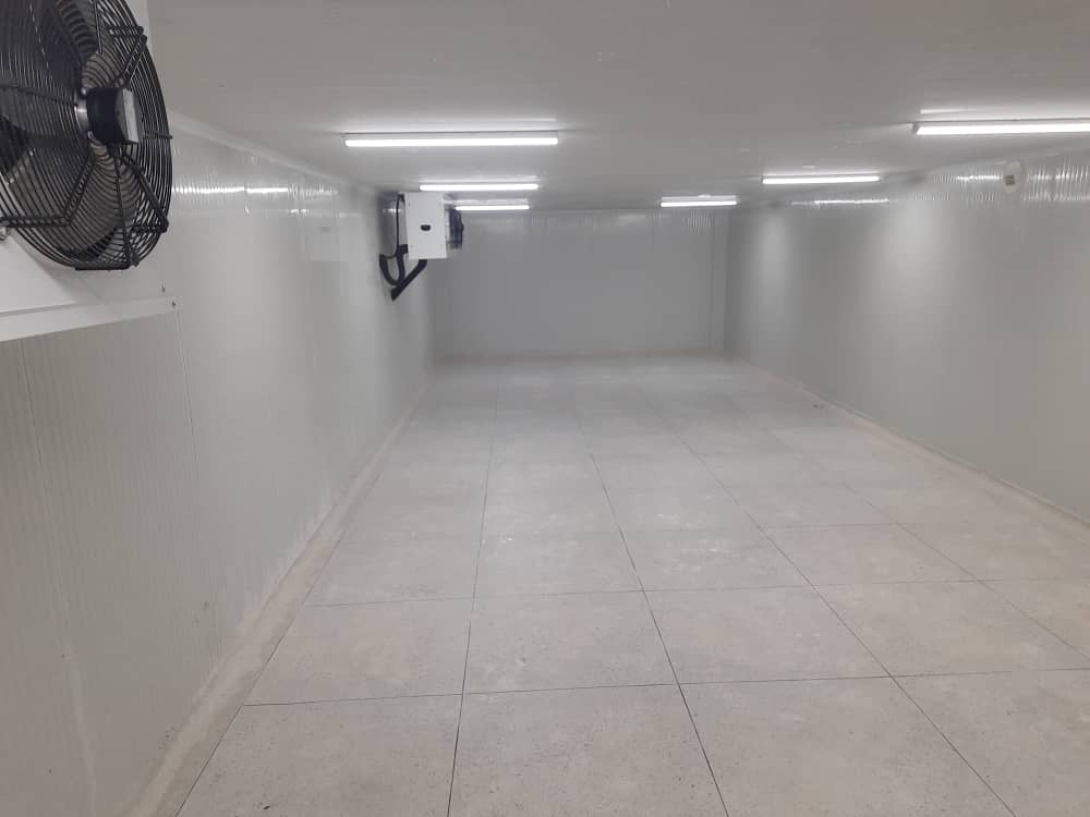
Cold Room Ceiling Panels with Overhead Insulation That Holds Its Line
Choose cold room ceiling panels with stable overhead insulation to reduce thermal drift, condensation risk, and long-term maintenance pressure.
Overhead Insulation That Holds Its Line
A cold room ceiling panel should do more than insulate a refrigerated space on day one. It should keep its thermal line over time, resisting overhead heat gain, moisture stress, joint weakness, and the slow performance decline that turns a once-stable room into a harder room to run.
That matters because overhead insulation problems rarely look dramatic at first. They show up as creeping temperature inconsistency, more refrigeration strain, dampness near seams, and a ceiling plane that no longer feels as tight or dependable as the rest of the room. In busy cold storage environments, that slow drift becomes an operating cost.
The Real Overhead Problem Starts After Installation
Most cold rooms look good when the project is first delivered. The ceiling is sealed, the room maintains the desired temperature, and the cooling system appears to be functioning properly. The problem usually begins later, when it must be proven whether the ceiling insulation can maintain its performance under actual operating conditions.
This test is more challenging than many buyers anticipate. The ceiling is under constant stress from temperature differentials, vapor movement, cleaning activities, service access points, and long operating hours. If the ceiling insulation strategy is weak, the room may still function, but it begins to lose the disciplined thermal behavior owners expect.
This is why some cold rooms never quite feel fully settled. They cool, but recover less efficiently after door movements. They stay cold, but do not provide the same level of reliability throughout the entire enclosed space. Facility teams begin dealing with minor condensation, seam issues, or unexplained efficiency drops that do not point to a single dramatic failure. The ceiling is often part of this story.
Why Is Ceiling Insulation Performance More Important Than It Seems?
In air-conditioned buildings, walls and doors attract more attention because they are visible and heavily used. However, the ceiling plays a different role. It is where thermal pressure silently affects the room every hour the system is running.
When ceiling insulation fails to do its job, the result is not merely theoretical heat transfer. It turns into operational friction. Cooling equipment works harder. Recovery time after outages may lengthen. The likelihood of moisture-related stress increases near joints and transition points. Cleaning crews notice more ceiling-related issues. Maintenance teams begin monitoring the ceiling more closely than planned.
For contractors, facility managers, and cold storage operators, this creates a costly middle ground. The room is not malfunctioning, but it no longer operates with the clean, stable logic that a good cold room design should ensure.
The Risk of Insulation That Looks Good but Ages Over Time
A cold room ceiling panel may still appear sound even if the ceiling insulation strategy is not suitable for long-term use. This leads to the decision being taken lightly.
Incorrect ceiling insulation selection typically leads to:
- Increased thermal drift over time.
- Greater susceptibility to condensation around seams and transition points.
- Higher cooling load and less predictable efficiency.
- More pronounced aging of the ceiling in active back-of-house areas.
- The need for additional maintenance without a single point of failure.
- Earlier pressure to repair, upgrade, or replace ceiling components.
This is particularly important in food production areas, supermarkets, distribution coolers, freezer rooms, cold storage warehouses, and commercial kitchens. In these environments, a ceiling that gradually loses its performance is not merely a ceiling issue. It becomes an operational issue.
A panel may be properly installed and technically complete, but if the insulation does not remain in place during use, it may give room operators the impression that the ceiling system was acceptable at delivery but is inadequate in the long term.
Fixed Ceiling Insulation vs. Basic Insulated Enclosure
The most useful comparison is not between two panel names. This comparison is between a ceiling system designed to maintain thermal integrity over time and a system that simply adds insulation to the top of the room.
| Decision Factor | Stable Overhead Insulation | Basic Insulated Closure |
|---|---|---|
| Long-term thermal consistency | Better preserved over time | More likely to drift gradually |
| Moisture resistance | Stronger support against condensation stress | More vulnerable around weak details |
| Joint performance | Better aligned with tight ceiling behavior | More dependent on field conditions |
| Refrigeration efficiency | Helps reduce avoidable load | Efficiency can erode over time |
| Maintenance burden | Lower corrective attention | More reactive ceiling upkeep |
| Ownership outcome | More predictable and controlled | More likely to create hidden friction |
This distinction is important because cold rooms are evaluated not just by how they look when first commissioned, but by how they perform after months and years of use.
What Helps Maintain Ceiling Insulation Performance
Good ceiling insulation performance does not stem solely from thickness. It arises from the design of the ceiling panel system, how it is joined, how it is supported, and its integration with the rest of the refrigerated enclosure.
Generally, several factors distinguish stronger ceiling performance from short-lived thermal comfort.
Consistent Thermal Envelope Behavior
The ceiling must maintain the insulation logic of the entire room. If the ceiling installation behaves like a separate layer rather than part of a single continuous envelope, thermal weaknesses tend to emerge sooner.
Better Joint Control
Insulation performance is reliable depending on the condition of the joints holding it together. Weak joints can turn a good panel into a problematic ceiling line. When joints remain tight, ceiling insulation functions as a system rather than merely a collection of parts.
Support That Maintains Long-Term Stability
Ceiling insulation performs best when the ceiling remains physically stable. Poor support planning can lead to minor movements, stress at transition points, and gradual deterioration in the roof’s most critical areas.
Smarter Drilling Planning
Light fixtures, sprinklers, hangers, pipes, and service openings affect whether the insulation continues to function as intended. Every opening presents an opportunity to either maintain or compromise thermal integrity.
Moisture Control Across the Ceiling Plane
A ceiling that effectively manages vapor and condensation pressure provides a much better chance for the insulation to remain effective. In refrigerated rooms, moisture control and insulation performance are more closely linked than many specifications acknowledge.
The Right Solution for Long-Lasting Ceiling Insulation
The right solution is typically a cold room ceiling panel system selected not just for the initial insulated enclosure but for long-term thermal stability. This means evaluating how the ceiling installation will perform after real operating cycles, repeated service activities, exposure to moisture, and years of cooling demand.
In practice, this usually means prioritizing the following:
- Insulated ceiling panels selected for actual room conditions.
- Joint details that help maintain thermal continuity.
- Support and suspension logic that keeps the ceiling plane stable.
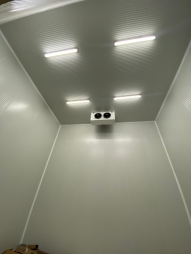
- Careful integration around lighting and service penetrations.
- Ceiling performance compatible with wall and door systems.
- Room design that treats the upper part of the enclosure as an active thermal layer.
This is where experience matters. The Freezewize Cooling System treats ceiling panels as part of a fully cooled shell, helping projects avoid common mistakes such as relying on ceiling insulation that appears sufficient in theory but becomes the first weak link in daily operation.
Quick Decision Guide
A stronger ceiling insulation strategy is generally the right choice in the following situations:
- The room operates for long hours with strict temperature requirements.
- Recovery rate and stable indoor conditions are critical.
- Humidity control is critical.
- There are multiple penetrations or service points in the ceiling.
- The facility has low tolerance for maintenance downtime.
- Total cost of ownership is more important than the lowest initial investment cost.
A simpler insulated ceiling approach may be acceptable in lighter-duty areas where performance expectations are less stringent and operating cycles are less demanding. However, in situations where room stability is critical, ceiling insulation should be specified not merely to meet basic thickness requirements but to maintain performance.
If the upper part of the room cannot maintain its thermal integrity, the rest of the room pays the price.
Related Solutions
Projects requiring stronger ceiling insulation performance typically benefit from coordinated decisions throughout the entire cladding system. Related solutions may include:
- Cold room wall panels for full thermal continuity.
- Freezer room panel systems for lower-temperature applications.
- Insulated cold room doors for better draft control.
- Cold room sealing and joint details for tighter cladding performance.
- Cold storage design solutions for better system-wide coordination.
These related solutions are most effective when planned together, rather than being addressed later as separate thermal weak points.
FAQ
Why is ceiling insulation so important in a cold room?
Because the ceiling is part of the thermal envelope. If the upper part of the room loses performance, the cooling system works harder and the room becomes less stable over time.
Can a cold room ceiling still perform poorly even if it is insulated?
Yes. Insulation thickness alone is not sufficient. Joint quality, structural stability, moisture control, and penetration planning all affect whether the ceiling insulation is truly functioning properly.
What are the early signs of ceiling insulation issues?
Common signs include slower recovery, small-scale condensation near joints, the need for more frequent ceiling maintenance, inconsistent room behavior, and a ceiling that feels looser over time.
Does better ceiling insulation reduce operating costs?
In most cases, yes. A more stable ceiling can help reduce preventable cooling loads, improve thermal consistency, and limit the need for corrective maintenance.
Is this more important for freezer rooms than for cooler rooms?
Freezer rooms typically reveal ceiling weaknesses more quickly, but cooler rooms also experience issues when ceiling insulation performance declines, especially in high-traffic facilities.
What should buyers consider before selecting a ceiling panel system?
They should review the target temperature, room size, exposure to humidity, openings, support planning, joint details, and how the ceiling integrates with the fully insulated enclosure.
Conclusion
A cold room ceiling panel should not merely provide ceiling insulation. It must maintain the room’s thermal integrity, remain stable under actual operating conditions, and ensure the ceiling system operates as efficiently as the rest of the enclosure.
The best ceiling insulation is insulation that maintains its performance long after the room has been put into service.
If your project depends on tighter performance, lower cooling loads, and fewer hidden ceiling issues, it is worth reviewing ceiling specifications early on to ensure the room remains robust from top to bottom.